Chinchero, Sacred Valley - Cusco
Q'aytu: traditional weaving workshop in Chinchero
Learn the full Andean textile process -natural dyeing, spinning and loom weaving- with weavers from Chinchero, in Cusco's Sacred Valley.
The story
In Chinchero, weaving is a way of remembering
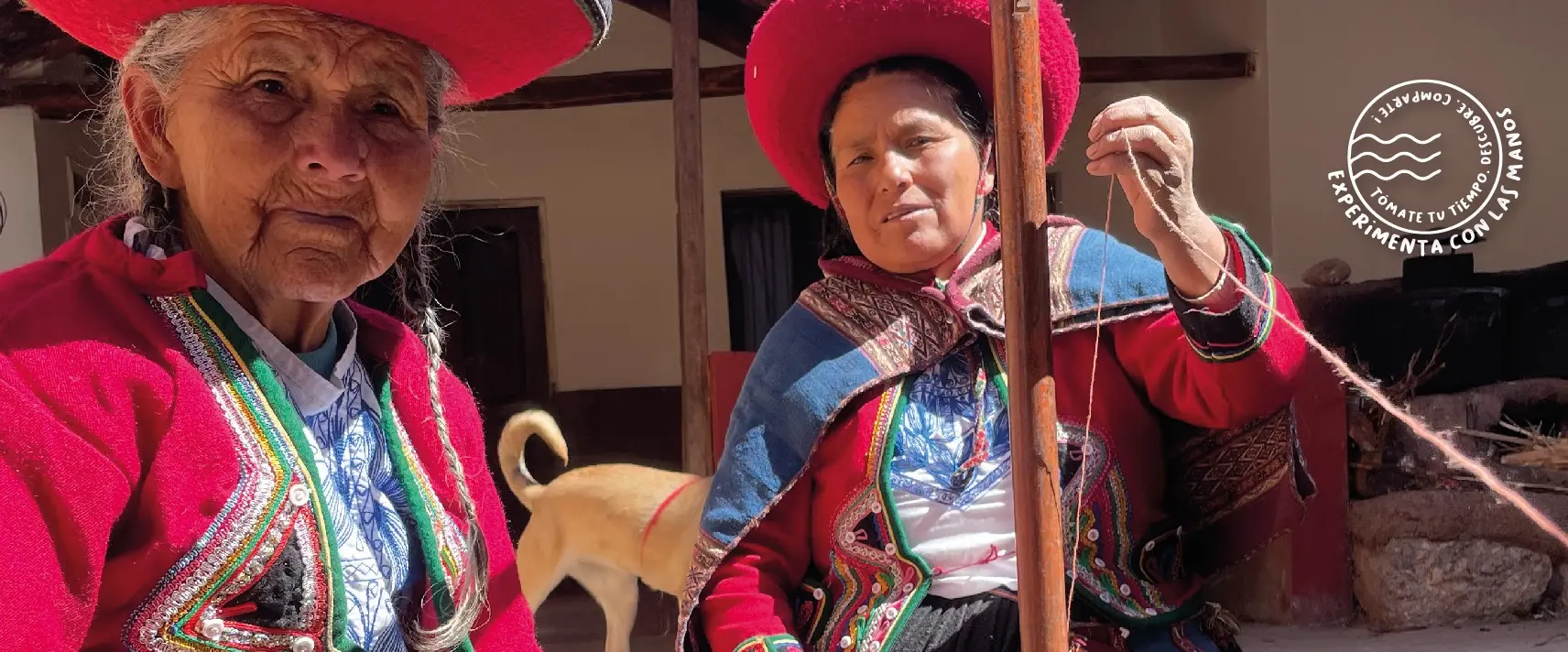
At 3,762 metres above the Sacred Valley, Chinchero is known as the birthplace of the rainbow. Here, long before industrial looms and chemical dyes, women were already reading the landscape in thread: the lakes, mountains and flowers live inside every weaving.
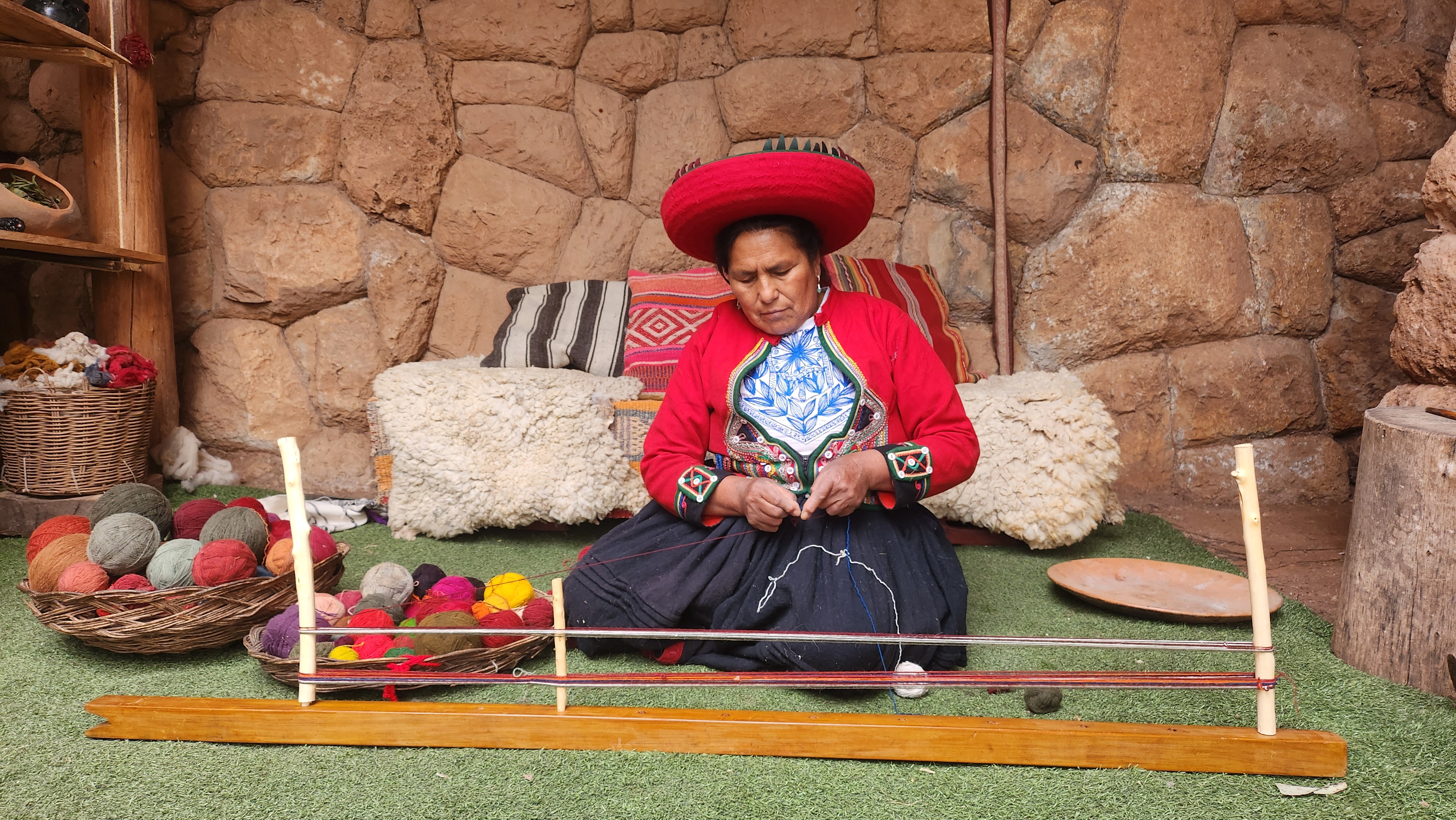
Our workshop is the home of Norberta and her family of weavers. The techniques we share — washing wool with a wild root that foams like soap, dyeing with cochineal and valley plants, spinning with the puska — have passed from grandmother to granddaughter for generations.
When you visit, you are not watching a performance. You sit among the weavers, sink your hands into the wool, and take home something you made yourself. That is how this knowledge stays alive — and stays in Chinchero.
“Every weaving holds the life of the person who made it. When I teach a visitor, my grandmother weaves with me again.”
- above sea level in the Sacred Valley
- 3,762 m
- generations of weavers
- 5
- natural dyes from the valley
- 100%
above sea level in the Sacred Valley
generations of weavers
natural dyes from the valley
The complete workshop
A journey through Andean textiles, step by step
The same workshop, for those with one day — or for those who want to stay the night in Chinchero. No script, at your own pace, hands in the wool.
-
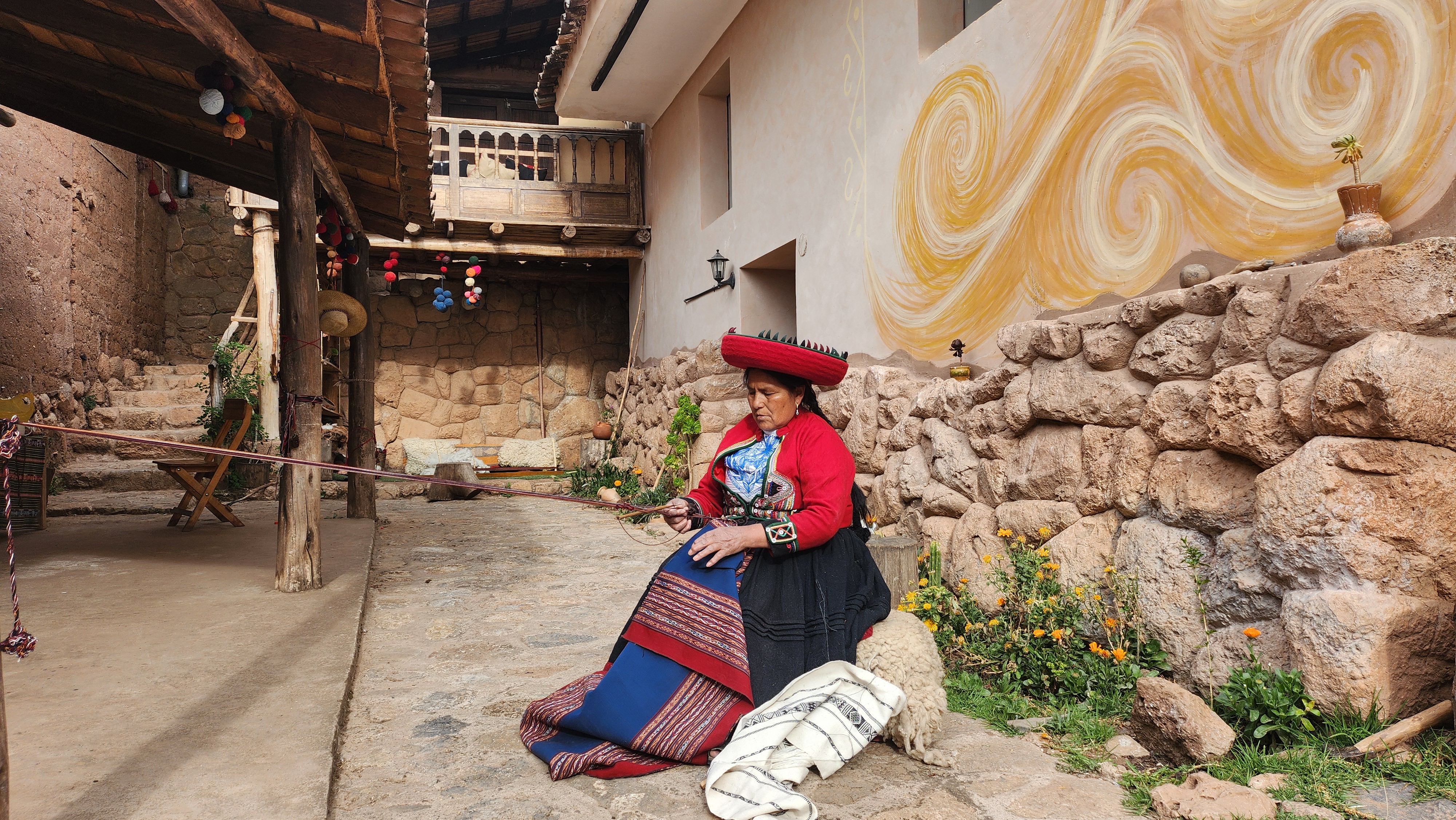
9:00 – 10:30
Arrival and a walk through Chinchero
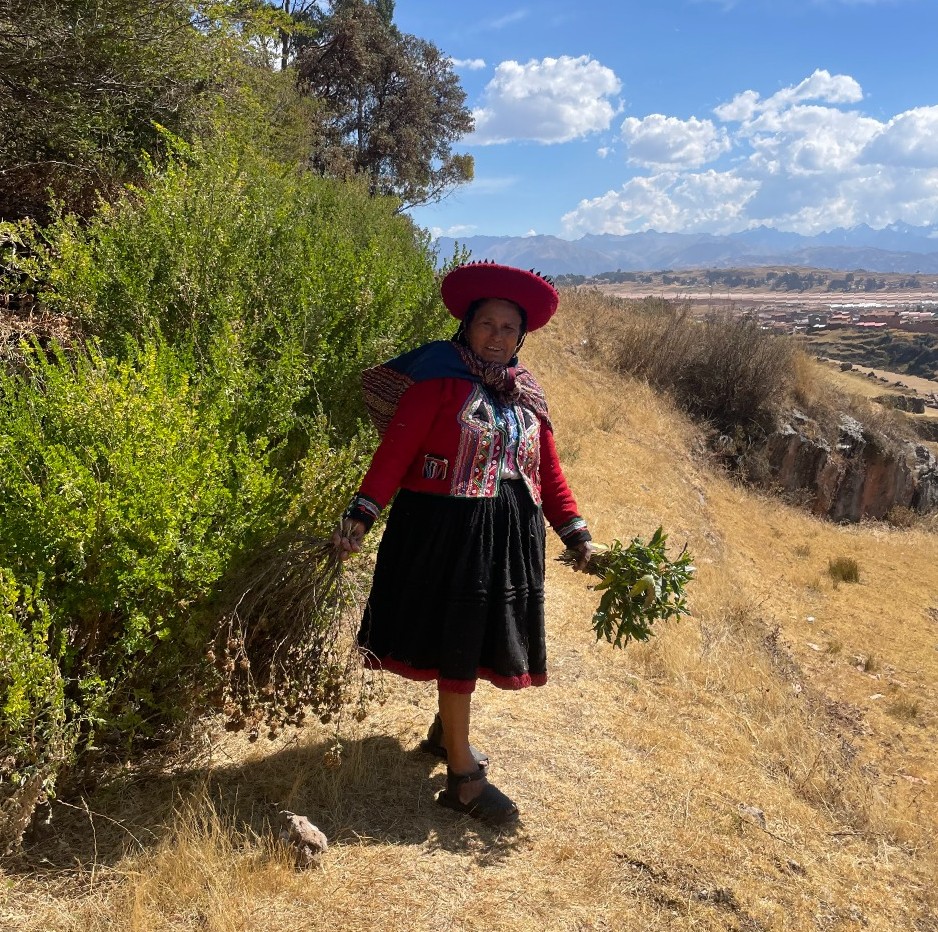
We welcome you with tea and quick introductions, then a short botanical walk through the heights of Chinchero, the “rainbow village” — to see where today’s colours come from.
Did you know? Chinchero sits at 3,762 metres, higher than Cusco itself. Cochineal, q’olle and chilca all grow within a few minutes of the door — the workshop’s whole palette, right outside.
-
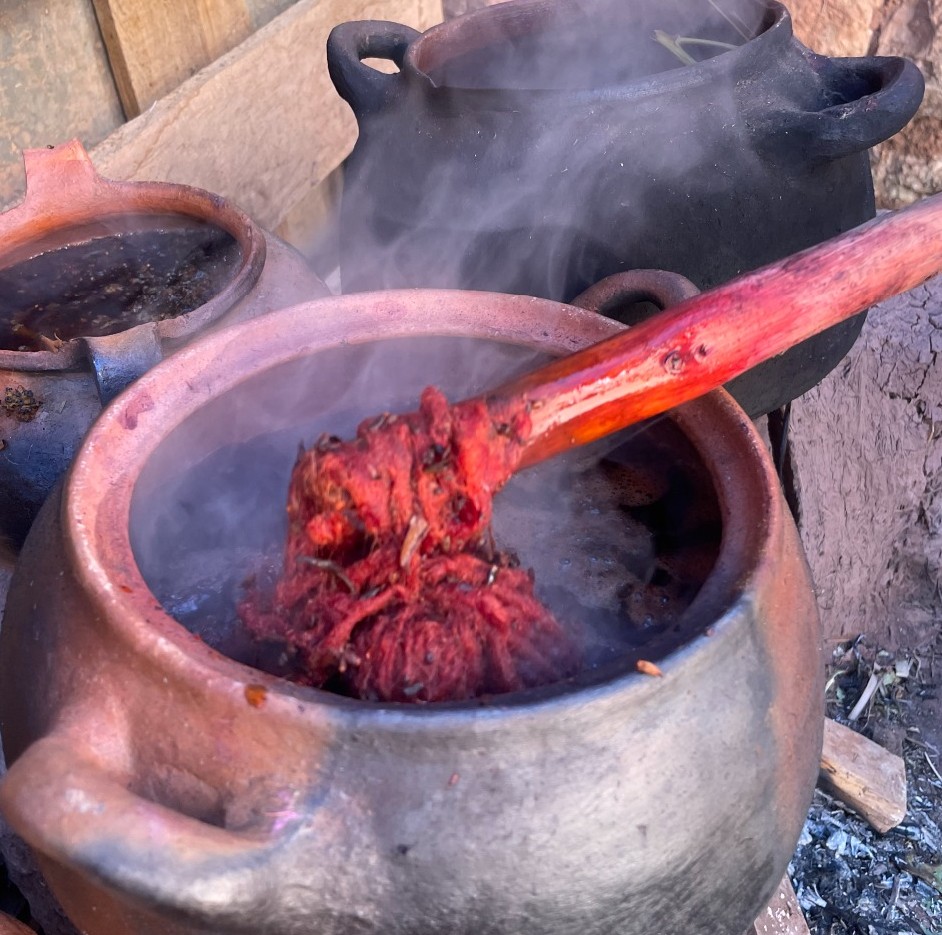
10:30 – 12:30
Natural dyeing and pompoms
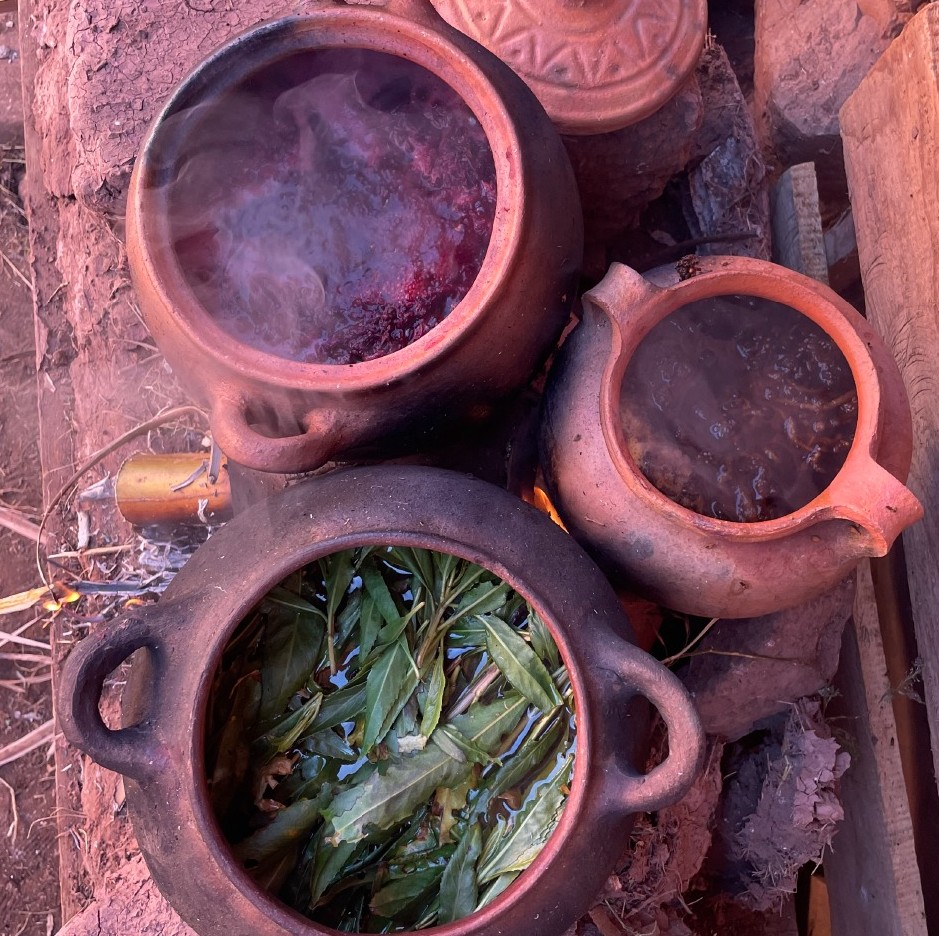
We boil wool in clay pots with cochineal, q’olle flowers and chilca leaves. You will watch colour being born in front of you, choose your own shades, and turn them into pompoms.
Did you know? Cochineal, a tiny cactus insect, gives more than twenty shades of red. A few drops of lime turn it orange; a pinch of salt, purple.
-
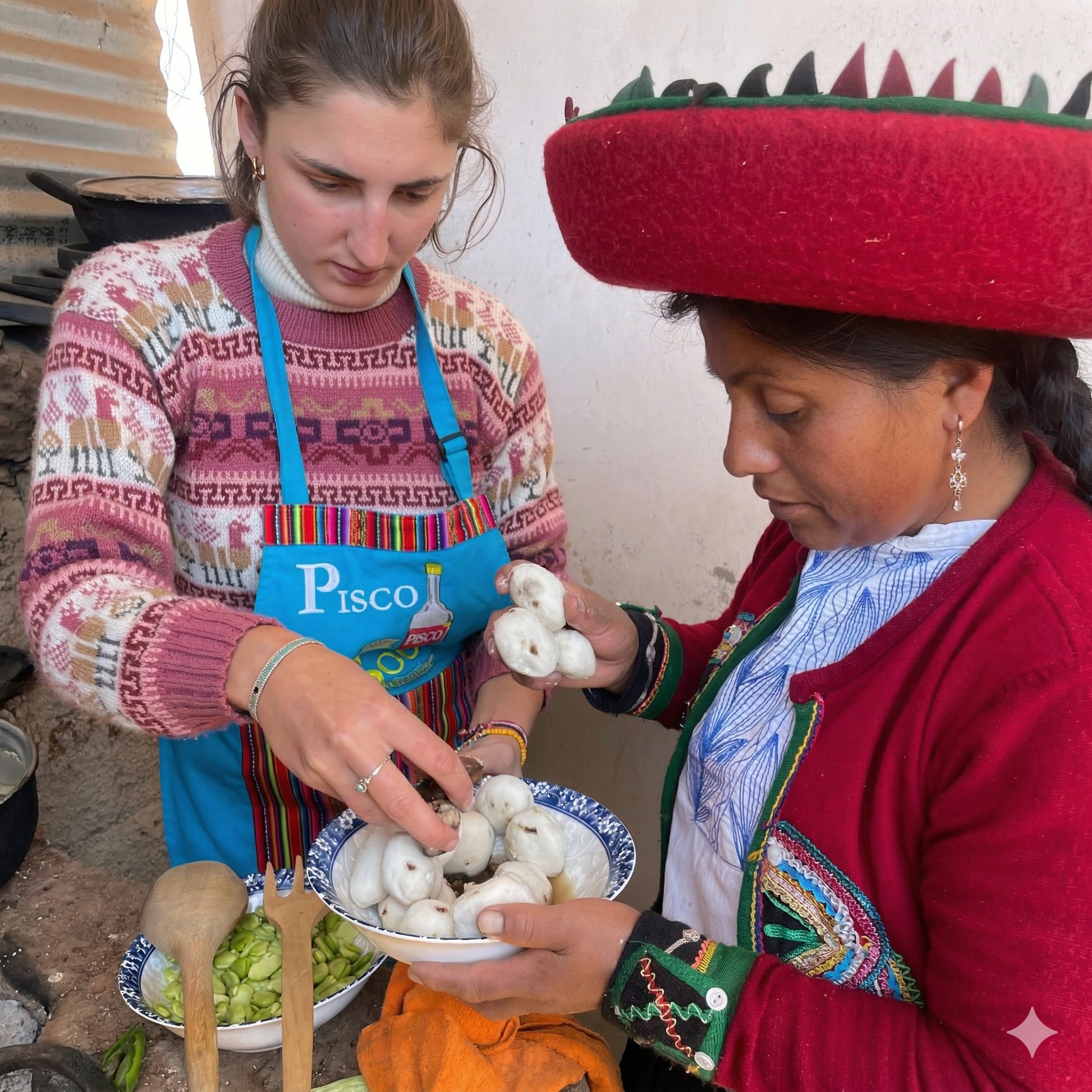
12:30 – 13:30
Lunch with the family
We share the table with Norberta and her family: a home-cooked, Andean lunch, made that same day. It is the workshop’s pause — and for many visitors, the favourite part.
Did you know? In Chinchero, cooking and weaving happen in the same courtyard: while the pot simmers, someone is always spinning.
-
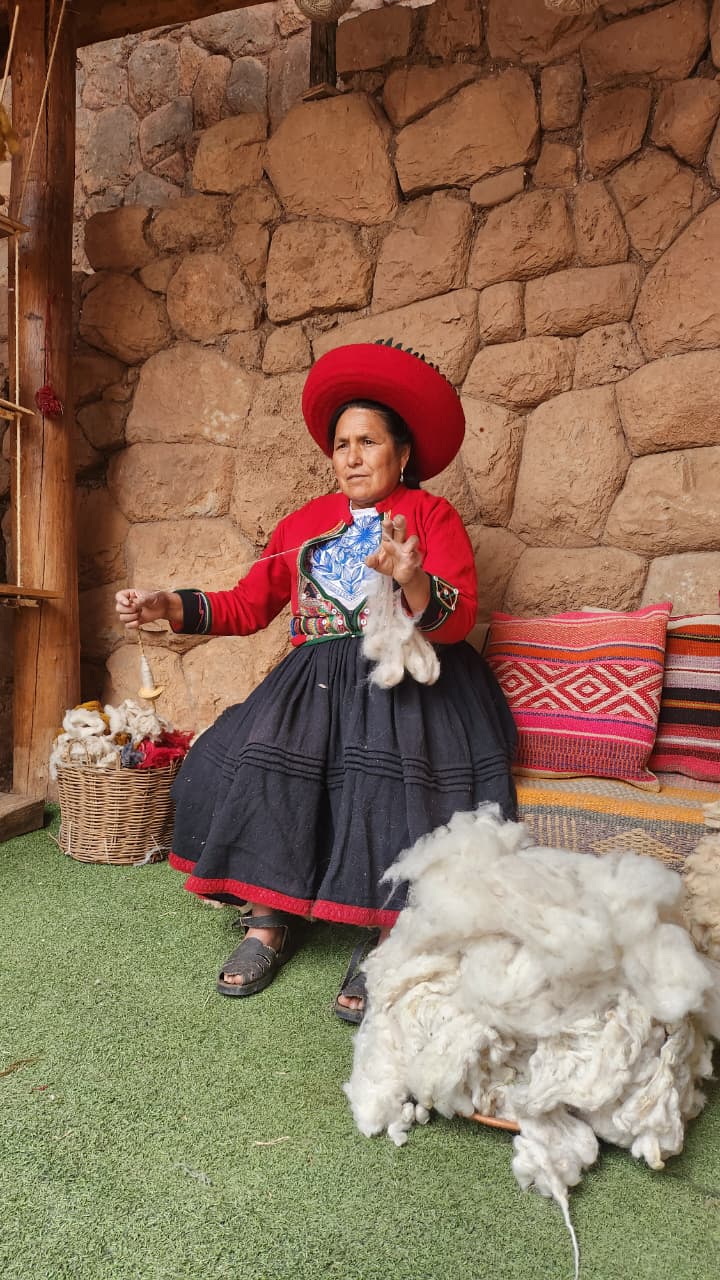
13:30 – 16:00
Spinning and your first weaving
With the puska — the Andean drop spindle — you will turn dyed fibre into thread. Then, on the backstrap loom, you will weave your first rows and finish a traditional bracelet in your own colours.
Did you know? The patterns read like symbols: the ñawi is an eye that watches over the road, the loraypo a valley flower. None is written down; they live in memory.
-
Immersion · Day 2
Want to go further? Stay one more night
In the 2-day immersion, the afternoon ends with free time to explore the square and the colonial church, a family dinner and a night at Norberta’s home. The next day, after breakfast, you return to the loom to learn new stitches and weave a complete belt.
Did you know? A belt takes almost twice the thread of a bracelet — it is the project the weavers save for guests who stay the night.
Both formats end with your own piece in your hands: a bracelet after the one-day workshop, a full belt after the immersion. Pricing and what’s included for each are just below.
Gallery
Life at the workshop
Wool, dyes, hands and mountains: what a morning in Chinchero looks like.
Why it’s different
A workshop, not a show
What makes this experience the one you remember years later.
-
Small groups
Maximum 8 people per session. Every visitor weaves with an artisan at their side.
-
A local family
The workshop is the family’s own home. What you pay stays in Chinchero.
-
100% natural dyes
Cochineal, q’olle, chilca and valley minerals. No chemicals, ever.
-
Hands-on
You don’t watch — you dye, spin and weave. And you take your piece home.
-
ES · EN · FR
We host you in Spanish, English or French, with no intermediaries.
-
For the whole family
A special child rate applies to both formats.
-
No experience needed
If you can hold a thread, you can weave. The artisans do the rest.
-
Tourism that sustains
Your visit keeps alive a craft competing with industrial production.
Visitors
What they take home, besides the weaving
Real words from people who spent a day with us.
“My partner and I were meant to stay for one night with Norberta but couldn’t leave! Her and her husband Alfredo were lovely hosts. We did a day weaving course which included foraging for plants to make natural dyes, a great experience. She also cooked us delicious food! Can’t wait to return in the future.”
Toby Turnbull
“A magical place — if you are anywhere near, you have to see it. The work they do is wonderful.”
Virginia Fernández
“Staying at Norberta and Alfredo’s felt like coming home! The rooms are spacious and clean, the food is delicious and learning in their workshop is an incredible experience. So grateful to them for sharing their knowledge and their home with me. Highly recommended!”
Batya Katz
“This is the workshop of Norberta and Alfredo. I stayed at this magical place for a week and Norberta taught me about weaving and the Andean style of living. They sell their handmade products in the shop — if you come to Chinchero, absolutely stop by!”
Martha
“A really beautiful and tranquil place where authentic, handmade textiles are being made by a family of generational weavers. Norberta and Alfredo are kind hearted and welcome everyone to come and understand their craft and art. Highly recommend!”
Navoda Hettiarachchi
“I learned natural dyeing and wove a lovely bracelet with Norberta, who is incredibly kind! We had lunch with her husband Alfredo — it was delicious! Go there with your eyes closed!”
Julien-Yacine
Frequently asked questions
Before you come
How long is the workshop?
The one-day format runs 7 hours, from 9:00 am to 4:00 pm. If you would rather go deeper, the immersion extends to 2 days with 1 night in Chinchero.
What’s the difference between the two formats?
Both share the same first day: natural dyeing, spinning and your first woven piece. The 2-day immersion adds a night with Norberta’s family, breakfast the next morning, and a second weaving session to finish a full belt.
Do children pay?
Yes, there is a special child rate for both formats: US$40 for the one-day workshop and US$82 for the immersion.
Is there a group discount?
Yes. The price per person drops from 3 travellers, and again from 5 — you will see it once you pick your format in the booking section.
What languages is it in?
Spanish, English and French, with no intermediaries. Explanations happen in your language, right at the workshop.
How do I get to Chinchero?
We are 45 minutes from Cusco and 25 from Urubamba, two minutes from the main square. All transport options are listed below — and we’re happy to arrange a trusted taxi for you.
What should I bring?
Sunscreen, water and a warm layer: we are at 3,700 metres. If you choose the 2-day immersion, pack a change of clothes for the night. All workshop materials are provided.
Can I cancel my booking?
Yes — free of charge up to 48 hours before, with a full refund. If weather complicates your travel, we’ll find a new date together.
Booking
Save your seat at the loom
Full day · 7 hours · 9:00 am – 4:00 pm
US$ 80
per person (1–2 travellers)
2-day immersion · 2 days, 1 night
US$ 165
per person (1–2 travellers)
Choose your format
Dyeing, spinning and your first woven bracelet, in a single day.
- Materials and natural dyes
- Family lunch
- Welcome tea
Everything in the full day, plus a night in Chinchero and a handwoven belt.
- Materials and natural dyes
- Lodging (1 night)
- 2 lunches, 1 dinner, 1 breakfast
- Welcome tea
Your selection
Full day
Fast reply - recommended option · +51 929 525 863
Details and cancellation
Not included (either format)
- Transport to Chinchero
- Guide / translator
Optional: Guinea pig (cuy) tasting (+US$ 14)
Cancellation
Free up to 48 hours before, with a full refund. Date changes at no cost, subject to availability.